Skip to content
Electrical substation and transmission infrastructure

Probabilistic Risk Analysis of a Substation

Substations are a critical part of the electric grid. These are highly complex systems, with an intricate mix of high-value assets such as transformers, circuit breakers, relays, capacitor banks, switches, and buswork. For most utilities, the management of all these assets is too burdensome to perform in any detail, so asset inspections and replacements are simply performed on a standardized schedule.

Overview

This begs the questions:

  • What is the true risk state of the substation? Which assets contribute the most to the risk state?
  • How confident is a utility that schedule-based asset maintenance represents the optimal time for asset intervention?
  • How can we be sure that an asset scheduled for replacement does not have another 20 years of useful life?
  • Even if an asset has a high estimated probability of failure, how important is the asset to the system overall? In other words, if that asset fails, does it matter to a substation as a whole?
  • ATS can answer these questions

Most organizations cannot answer these questions because they do not have the tools to be able to use available data to build a system model of the substation.

ATS can. We use our propriety software suite, called the Artificial Intelligence-Probabilistic Risk Analysis (AI-PRA) Suite to answer key questions that managers have.

Applying Quantitative Methods to Power Systems

For a power system … ATS can …
What is the overall probability of failure?

… compute the exact probability of failure for full or partial failure modes, enabling better system planning.

How can the system fail?

What are the root causes of failure, and their probabilities?

… predictively determine the full set of failure modes, and their probabilities. Managers will be able to make more efficient resilience investments.

Which assets contribute most toward the system’s failure risk? (transformers, switches, capacitor banks, conductors, generators, etc.)

… identify the specific assets that most contribute to the risk state of the system and quantify the risk reduction benefit from inspections and replacements.

What external risk initiators are most important? (inclement weather, seismic hazards, sabotage, etc.)

… determine the external sources of risk for which operators should apply resources to mitigate.

How should the next available O&M or capital dollar be applied to ensure maximum system resilience and minimize failure risk?

… produce optimal O&M and capital spend policies which mathematically guarantees that risk costs are maximally reduced in the most efficient manner possible.

What is the expected loss (in dollars) from system risks, and what is the best way to maximally mitigate this risk to ensure the highest quality of service?

… deliver a complete quantitative characterization of system risk, including full risk distributions in dollars, which provide intuitive decision-making support.

By utilizing our AI-PRA Suite, we can help our customers
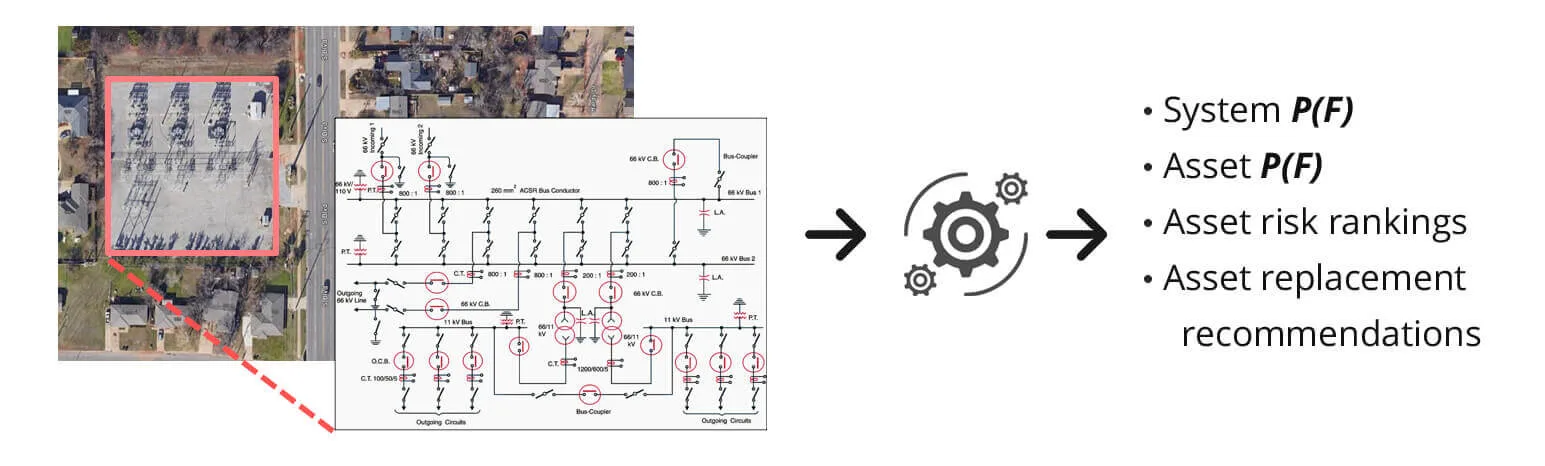
  • Identify the exact failure risk of their substations
  • Identify all of the failure modes that are possible within the substation: a predictive root cause analysis
  • Quantify the total risk consequence from operations, in dollars
  • Identify the most risk-critical assets within the system
  • Recommend the resilience and risk mitigation actions that have a mathematical certification of optimality

Asset Importance Metrics

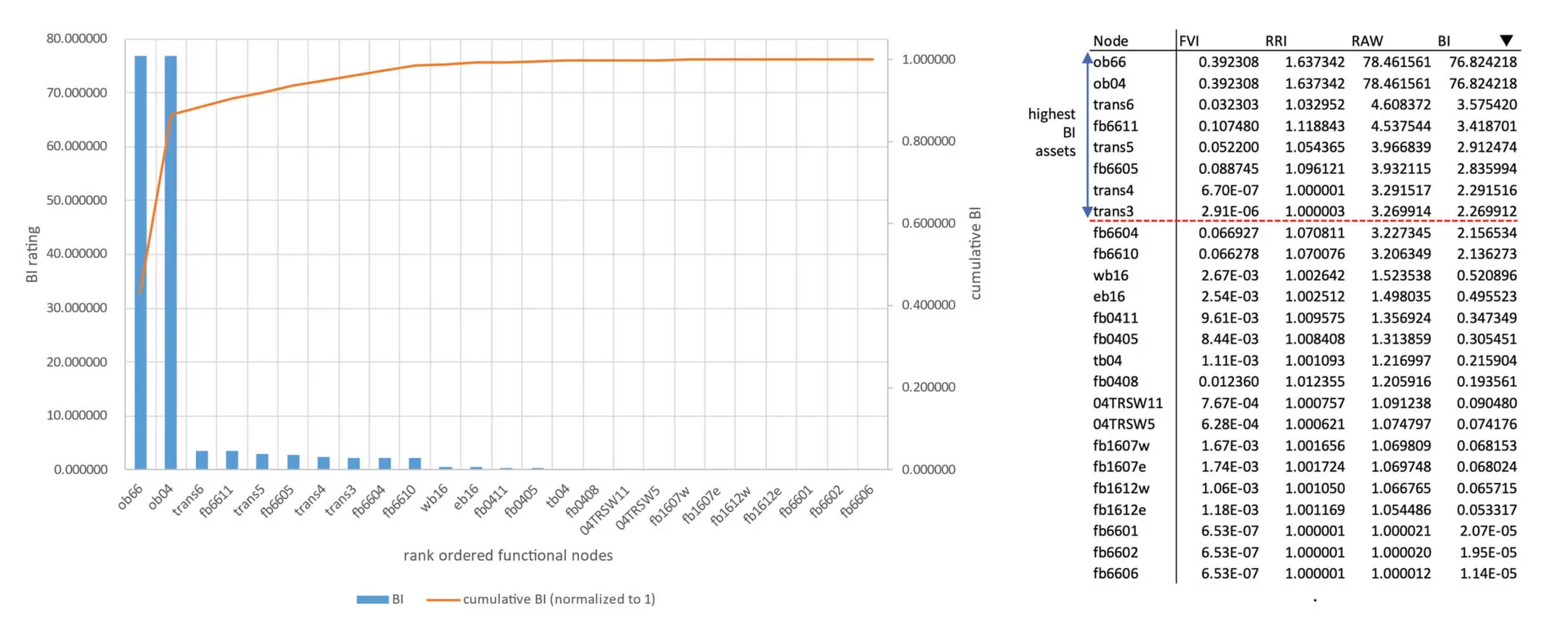
  • Sorting by Birnbaum importance metric yield useful information
  • 96% of all risk benefit carried by top 8 nodes
  • Improving these yield the greatest risk mitigation response

Strategic Replacement Policy Optimization
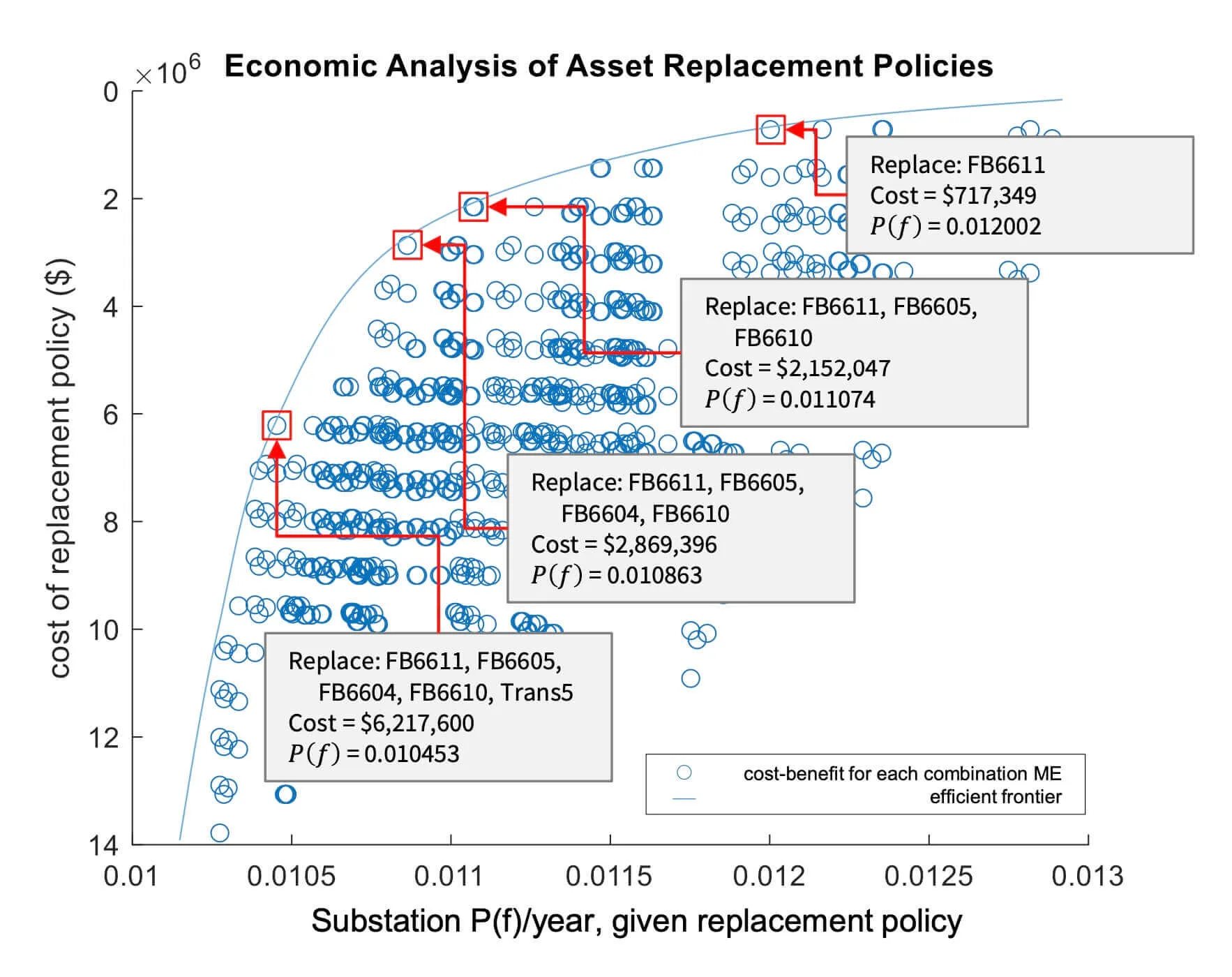
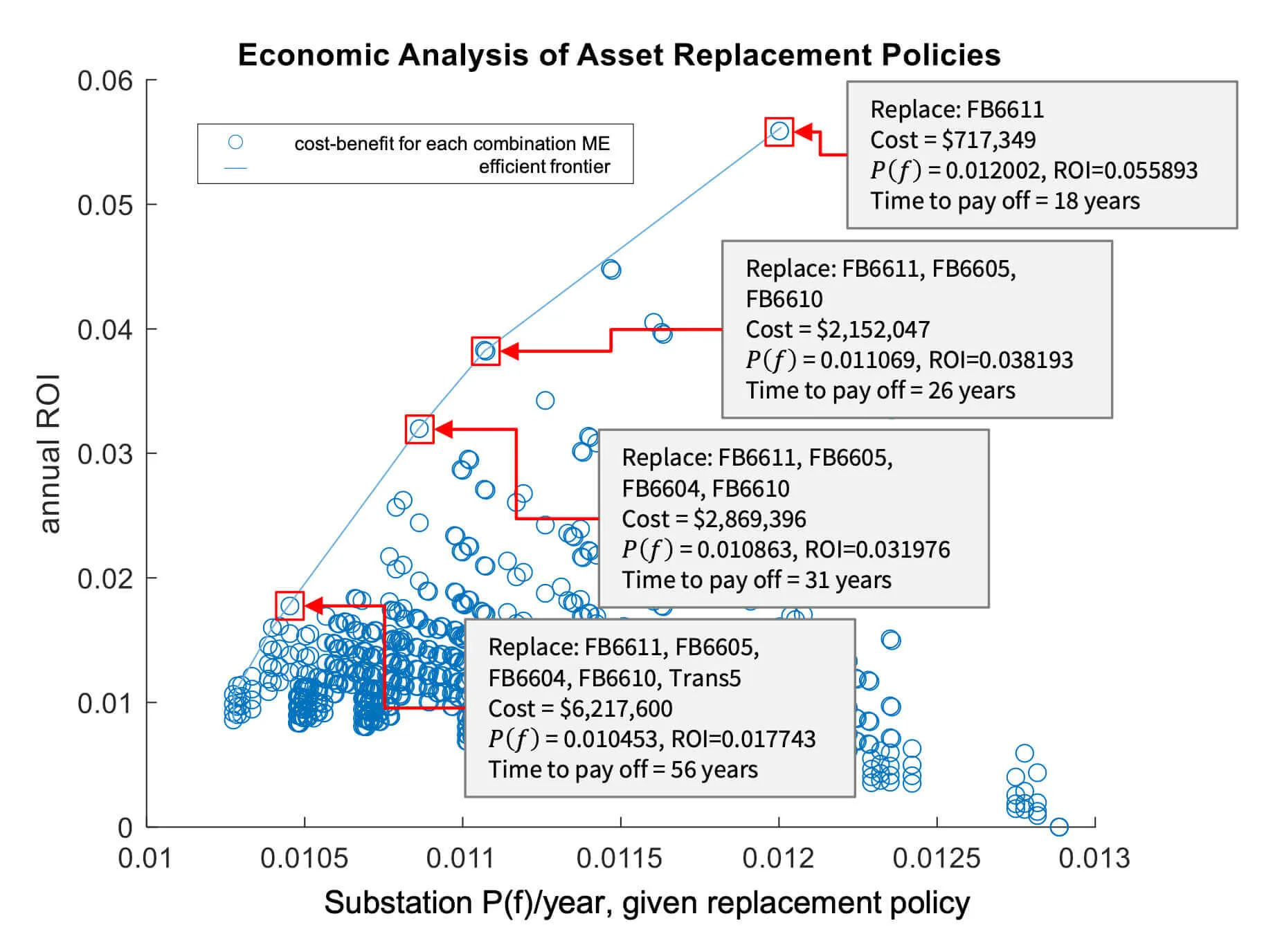
  • The resulting policy graph depicts cost and 𝑃(𝑓) for each possible combination of critical assets for replacement
  • Interior policies are not efficient
  • There exists maximally efficient policies on the efficient frontier, which represent the best use of CapEx and OpEx resources.
  • This analysis can help to inform decision making by executive leadership and Board
  • Provides rational justification to regulators

Strategic Replacement Policy Optimization With Consequence
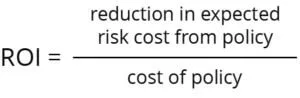
  • Computing complete risk cost, we can recompute the efficient frontier of strategic replacement policies
  • With risk cost data, we can compute the annual ROI from each policy
  • Interior policies are not efficient because there exists more efficient policies on the edge of the policy cluster
  • Policies on the efficient frontier represent policies that will pay off soonest